MONGOLIA STRESSES THAT GEOPOLITICAL UNCERTAINTY SHOULD NOT DEEPEN GLOBAL ECONOMIC FRAGMENTATION
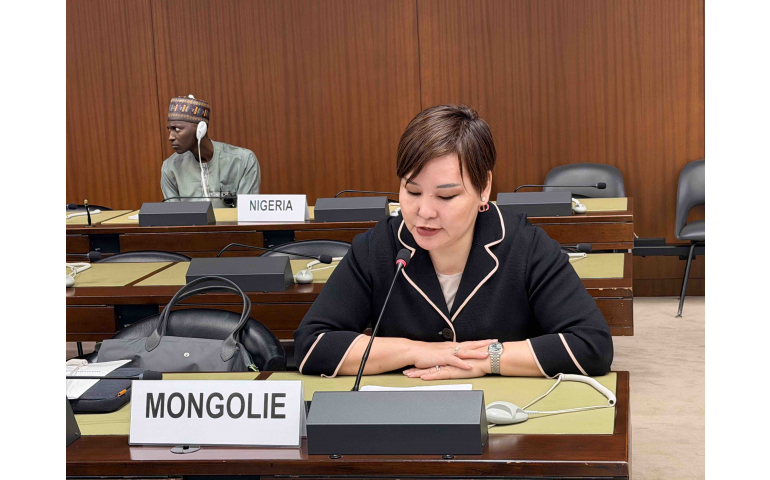
Geneva, 25 September 2026 — Ambassador Davaasuren Gerelmaa, Permanent Representative of Mongolia to the United Nations Office and other international organizations in Geneva, delivered Mongolia’s statement during the General Debate of the 73rd session of UNCTAD’s Trade and Development Board.
Ambassador Gerelmaa noted that the disruptions in the Strait of Hormuz demonstrate how geopolitical shocks can rapidly spread through trade, energy, food, transport and supply chains, with significant consequences for the economies and development prospects of developing countries. For landlocked developing countries such as Mongolia, geographical remoteness, dependence on transit routes, and high transport and logistics costs can further amplify the impact of external shocks.
Against the backdrop of growing geopolitical and economic fragmentation, Mongolia stressed that efforts to strengthen supply chain resilience should not lead to further fragmentation of the global economy. Mongolia highlighted the need for greater investment in transport and transit infrastructure, renewable energy, digital connectivity, logistics and trade facilitation, particularly in landlocked developing countries.
Mongolia underscored UNCTAD’s important role in addressing trade, investment, finance, technology and development in an integrated manner and called for the effective implementation of the Awaza Programme of Action for Landlocked Developing Countries 2024–2034, the outcomes of UNCTAD16 and the Geneva Consensus, translating these commitments into concrete support for developing countries.
Mongolia concluded that geopolitical uncertainty should not lead to a more divided global economy, but rather reinforce open and predictable trade, diversified and resilient supply chains, productive investment, stronger international cooperation and development-centred multilateralism.